
In a world where drones zip through the skies like over-caffeinated bees, field tests are the unsung heroes ensuring they don’t crash into your neighbor’s prized tomato plants. These tests are crucial for fine-tuning everything from flight stability to obstacle avoidance. After all, nobody wants their drone to become an accidental lawnmower.
Overview of Drone Field Tests
Drone field tests involve real-world evaluations that assess the performance of unmanned aerial vehicles. These assessments focus on key areas such as flight stability, obstacle avoidance, and navigation accuracy. Conducting these tests provides crucial data for manufacturers and operators, ensuring that drones can operate safely in diverse environments.
During flight stability assessments, drones undergo various maneuvers to analyze how well they maintain their altitude and course. Obstacle avoidance tests evaluate the drone’s ability to detect and navigate around objects, reducing the risk of accidents. Specific sensors, such as LIDAR and cameras, play a vital role in this process, contributing to enhanced safety features.
The testing environment can vary significantly, from open fields to urban landscapes. Assessing performance in different terrains helps determine a drone’s adaptability to various applications, including agricultural surveillance and infrastructure inspections. Testing protocols often include controlled scenarios that simulate real-life conditions.
Data collected during these tests is invaluable. It informs software updates and hardware improvements, ultimately enhancing the user experience. Regulatory bodies may require documented test results before granting flight permissions, ensuring compliance with safety standards.
Field tests also enable manufacturers to fine-tune drone designs, focusing on durability and efficiency. With growing interest in commercial drone usage, their reliance on comprehensive testing increases. Performance metrics gathered during these evaluations guide developers in meeting industry demands while prioritizing safety.
Importance of Drone Field Tests
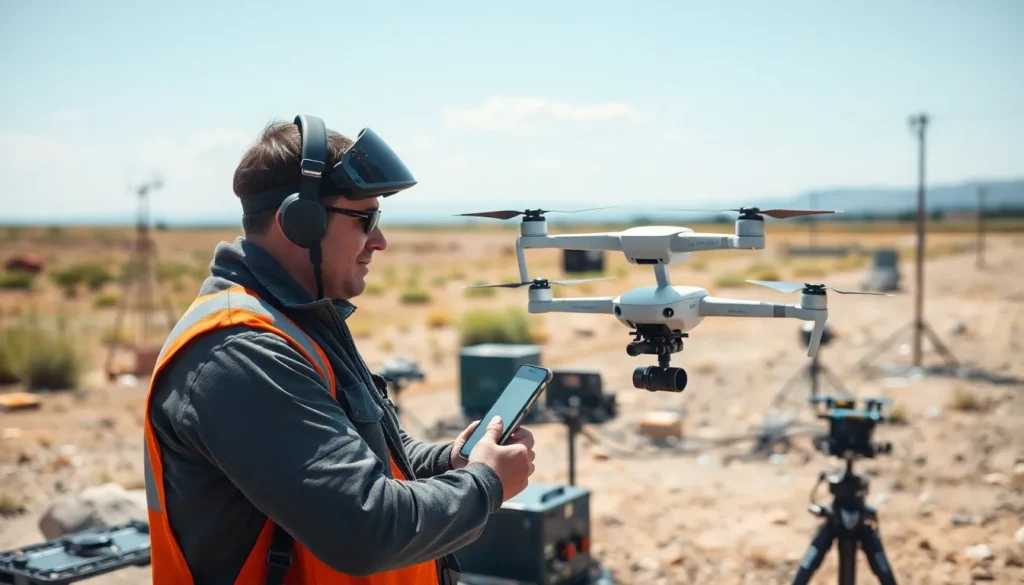
Drone field tests significantly enhance flight safety and operational efficiency. By carefully assessing drone capabilities in real-world scenarios, manufacturers and operators gather vital insights.
Enhancing Safety and Efficiency
Safety influences the design and functionality of drones. Conducting field tests minimizes risks associated with drone operations by identifying potential hazards. Improved obstacle detection systems, developed from these tests, allow drones to navigate complex environments effectively. Enhanced algorithms also support better flight stability, ensuring smoother maneuvers during diverse missions. Efficiency derives from optimizing battery life and performance, which field tests reveal under various conditions. Data-driven adjustments lead to increased reliability, significantly beneficial in industries relying on drones for critical tasks.
Validating Technology and Performance
Technological validation begins with comprehensive field tests that simulate real-world challenges. Tests reveal strengths and weaknesses in drone performance, confirming hardware and software integration. Manufacturers obtain quantifiable results that guide ongoing development for better navigation accuracy. Sensors like LIDAR and cameras undergo rigorous assessments to verify their effectiveness in detection and avoidance. Regulatory compliance emerges from validating flight data against industry standards, ensuring drones meet required safety criteria. These evaluations reflect manufacturers’ commitment to delivering high-quality, dependable drones that reliably serve diverse applications.
Types of Drone Field Tests
Drone field tests come in several types, each focusing on different aspects of performance and functionality. These tests ensure drones operate safely and efficiently in diverse environments.
Environmental Testing
Environmental testing evaluates a drone’s performance under various weather and terrain conditions. Rain, wind, and temperature fluctuations impact flight characteristics. Assessments take place in open fields and urban areas. They verify how drones handle obstacles like trees or buildings, ensuring adaptability for agricultural or industrial tasks. Manufacturers obtain valuable data to improve designs, enhancing reliability in challenging environments.
Payload Capacity Testing
Payload capacity testing measures how much weight a drone can carry while maintaining stable flight. This assessment involves adding various weights to the drone and monitoring performance under load. Payloads can include sensors, cameras, or agricultural equipment, reflecting real-world usage scenarios. Successful tests inform operators about optimal configurations for specific missions, increasing operational efficiency. Regular evaluations help manufacturers refine designs and improve overall functionality.
Flight Endurance Testing
Flight endurance testing determines how long a drone can operate on a single battery charge. These tests involve timed flights that assess battery life under different conditions. Wind resistance, payload weight, and flight patterns affect endurance. By gathering data, manufacturers improve battery performance and energy efficiency. Enhanced algorithms may emerge from these assessments, prolonging flight times and expanding operational range. Testing ensures that drones meet the demands of long-duration missions in commercial and recreational applications.
Key Challenges in Conducting Drone Field Tests
Conducting drone field tests presents several key challenges.
Regulatory Hurdles
Regulatory hurdles hinder many drone tests. Specific airspace restrictions may limit where tests can occur. Operators must acquire various permits before conducting evaluations. Compliance with local laws ensures safety and avoids legal penalties. The Federal Aviation Administration outlines essential guidelines that operators must follow. Adhering to such regulations can impact test schedules and locations, complicating logistics. Understanding these requirements is crucial for manufacturers and operators seeking to develop and test drones effectively.
Technical Limitations
Technical limitations pose significant obstacles to successful field tests. Sensor accuracy can affect obstacle detection and navigation performance. Variability in environmental conditions, such as wind and lighting, may lead to inconsistent test results. Battery life limitations restrict flight endurance during evaluations. Data processing capabilities can also impact real-time decision-making. These challenges necessitate ongoing improvements in technology and design to enhance drone reliability and efficiency. Identifying these technical constraints informs the development process for manufacturers.
Drone field tests are indispensable for ensuring the safety and reliability of unmanned aerial vehicles. They provide critical insights into performance under real-world conditions while addressing potential hazards. By continuously refining flight stability and obstacle avoidance systems, these tests help manufacturers enhance their designs and meet regulatory standards.
The challenges faced during testing highlight the need for ongoing innovation in drone technology. As manufacturers adapt to these hurdles, they pave the way for safer and more efficient drone operations across various industries. Ultimately, the commitment to rigorous field testing reflects a dedication to advancing drone capabilities while prioritizing safety and performance.