
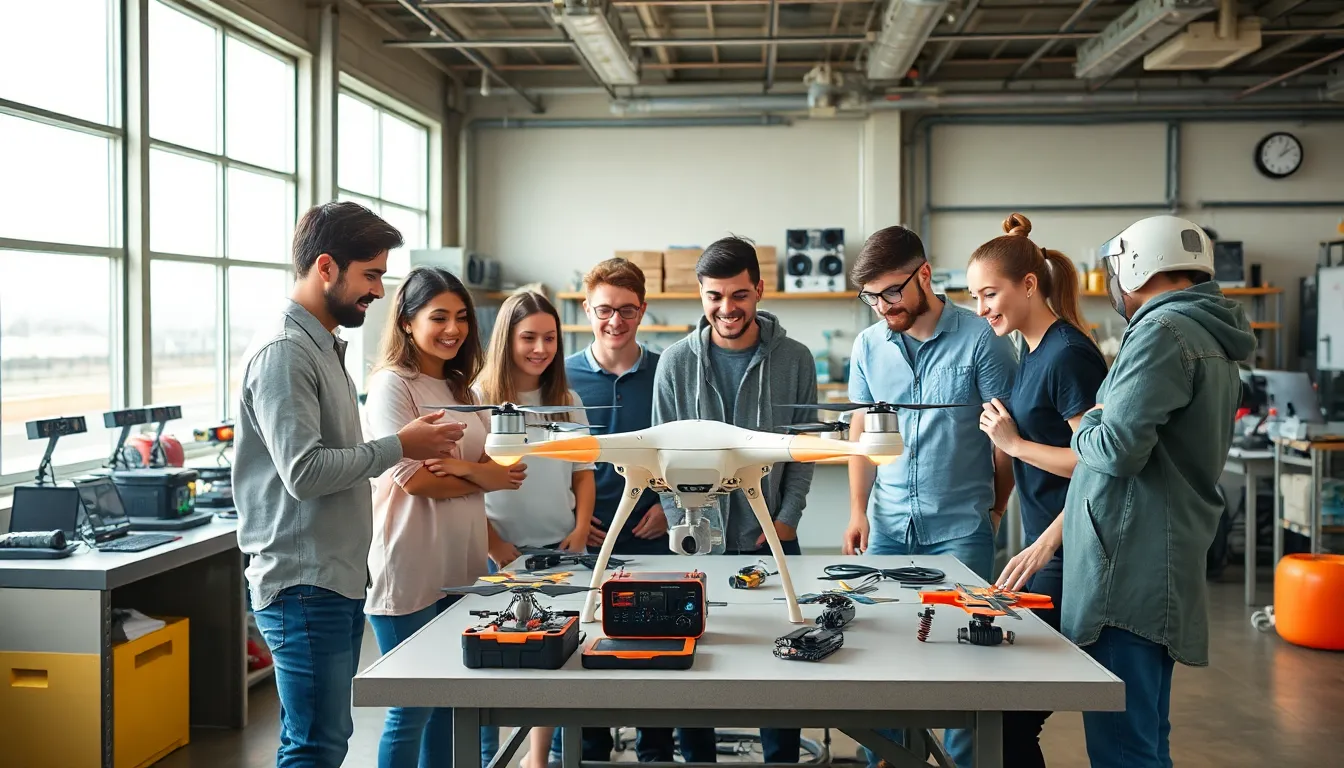

In a world where drones are no longer just toys but flying marvels of technology, innovation competitions are taking the skies by storm. These thrilling contests aren’t just about who can make the coolest drone; they’re about pushing boundaries and redefining what’s possible. Picture this: engineers and hobbyists alike, battling it out in a high-stakes arena, each one hoping to claim the title of drone champion while showcasing their genius.
Overview of Drone Innovation Competitions
Drone innovation competitions showcase the fusion of creativity and technology. Engineers, students, and hobbyists participate in these events to solve complex challenges, pushing the boundaries of drone capabilities. Various formats exist, including racing, obstacle courses, and aerial photography contests.
Participants often design drones tailored to meet specific criteria, such as weight limits or speed targets. Many competitions offer real-world scenarios, simulating tasks like search and rescue or environmental monitoring. Prizes typically range from cash awards to scholarships or sponsorships.
Collaborative efforts among teams foster innovation and knowledge sharing. Many competitors work alongside industry experts to develop cutting-edge solutions. Occurrences of these competitions can be found at local, national, and international levels, amplifying their impact on the drone community.
Sponsorship plays a significant role, providing financial support and resources. Companies invest in these events to discover new talent and inspire future engineers. Notably, competitions often emphasize sustainability, encouraging participants to consider eco-friendly designs.
Networking opportunities abound at these events, allowing newcomers to establish connections with seasoned professionals. Knowledge exchange occurs through workshops and panels, enhancing participants’ skills and understanding.
Overall, drone innovation competitions serve as a catalyst for technological advancement, attracting a diverse range of talent and ideas. These contests continue to evolve, reflecting the rapid changes within the drone industry and its applications.
Key Objectives of Drone Innovation Competitions

Drone innovation competitions aim to drive technological advancement and creativity in the drone sector. They encourage participants to push boundaries and explore new applications for drones.
Fostering Creativity and Innovation
Competitors design unique solutions tailored to specific challenges. These innovative designs showcase advancements in aerodynamics, sensors, and autonomous systems. Participants frequently develop prototypes that demonstrate how drones can operate in complex environments, such as urban areas or remote locations. Creativity emerges as teams experiment with various materials and technologies, seeking to enhance performance and efficiency. Events emphasize out-of-the-box thinking, empowering teams to generate ideas that could influence future drone applications.
Encouraging Collaboration and Teamwork
Teams often consist of diverse members, each bringing unique expertise to the table. This diversity fosters a collaborative environment that enhances problem-solving capabilities. Participants share knowledge and skills, leading to improved tactics and strategies for tackling challenges. Workshops and mentorship opportunities provided by industry experts further strengthen collaboration. Networking events allow novice competitors to connect with experienced professionals, creating lasting relationships that extend beyond competitions. Ultimately, teamwork plays a vital role in the success of participants, encouraging collective growth and inspiring innovation.
Major Drone Innovation Competitions Worldwide
Various drone innovation competitions worldwide showcase the creativity and technological advancements driving the drone industry forward. These events invite participants to tackle complex challenges while demonstrating their skills.
Drones for Good
Drones for Good emphasizes the positive impact of drones in humanitarian efforts. Participants develop drones specifically designed for applications such as disaster response, environmental monitoring, and public safety. Innovations introduced in this competition frequently focus on leveraging drone technology to address pressing global issues. Teams often collaborate with nonprofit organizations to ensure their solutions align with real-world needs. Ultimately, Drones for Good highlights how technology can contribute significantly to societal welfare.
The International Drone Challenge
The International Drone Challenge attracts participants from various countries, fostering a global spirit of innovation. This competition challenges teams to create drones capable of completing specific tasks, such as cargo delivery or search operations. Rigorous judging criteria ensure that only the most efficient and effective designs succeed. Competitors gain valuable experience and insights from a diverse array of international teams. The collaboration promoted by this event often leads to groundbreaking ideas and advancements in drone technology.
The AUVSI Student Unmanned Aerial Systems Competition
The AUVSI Student Unmanned Aerial Systems Competition focuses on promoting education and innovation among students. University teams participate by designing and building advanced unmanned aerial systems that meet stringent specifications. Each year, the competition features different themes and requirements, encouraging participants to adapt their solutions. Engaging with industry professionals provides students exposure to real-world applications and promotes networking opportunities. This platform not only nurtures budding talent but also contributes to the advancement of the unmanned aerial systems field.
Impact of Drone Innovation Competitions
Drone innovation competitions significantly influence technology and creative solutions within various sectors. These events drive advancements that extend beyond the competition floor.
Advancements in Drone Technology
This competitive environment sparks innovations in drone technology. Teams explore new designs and functionalities, focusing on aerodynamics and sensor integration. Improved flight stability results from the collective expertise shared during these competitions. Meanwhile, autonomy becomes a key feature, enhancing navigation capabilities. Software improvements also emerge, offering better data processing and real-time analytics. Companies often adopt cutting-edge solutions developed in these competitions, accelerating industry advancements.
Real-World Applications of Innovations
Innovative solutions from drone competitions translate into real-world applications. Search and rescue operations benefit from enhanced drone capabilities, saving lives during emergencies. Environmental monitoring utilizes drones to conduct surveys efficiently, collecting vital data on ecosystems. Agricultural sectors adopt drones for precision farming, optimizing crop yields while reducing resource waste. Humanitarian efforts leverage these advancements to deliver aid in hard-to-reach areas effectively. The versatility of drones continues to expand as innovations from competitions meet market demands.
Drone innovation competitions represent a dynamic intersection of creativity and technology. These events not only challenge participants to push the limits of drone capabilities but also foster collaboration and knowledge sharing among diverse teams. The emphasis on real-world applications ensures that advancements made in these competitions have significant implications across various industries.
As the drone landscape continues to evolve, these competitions will remain crucial in driving innovation and inspiring future generations of engineers and enthusiasts. With each contest, new ideas emerge that could redefine how drones are utilized, ultimately benefiting society in numerous ways. The future of drone technology is bright, and these competitions are at the forefront of that exciting journey.


