Ever had that moment when your iPhone chimes in with a cheeky reminder that it’s just a tad too close for comfort? It’s like having a clingy friend who just won’t take a hint. While it may seem like a minor annoyance, that pesky notification can interrupt your flow and leave you wondering how to regain your personal space.
Understanding the “May Be Too Close” Message
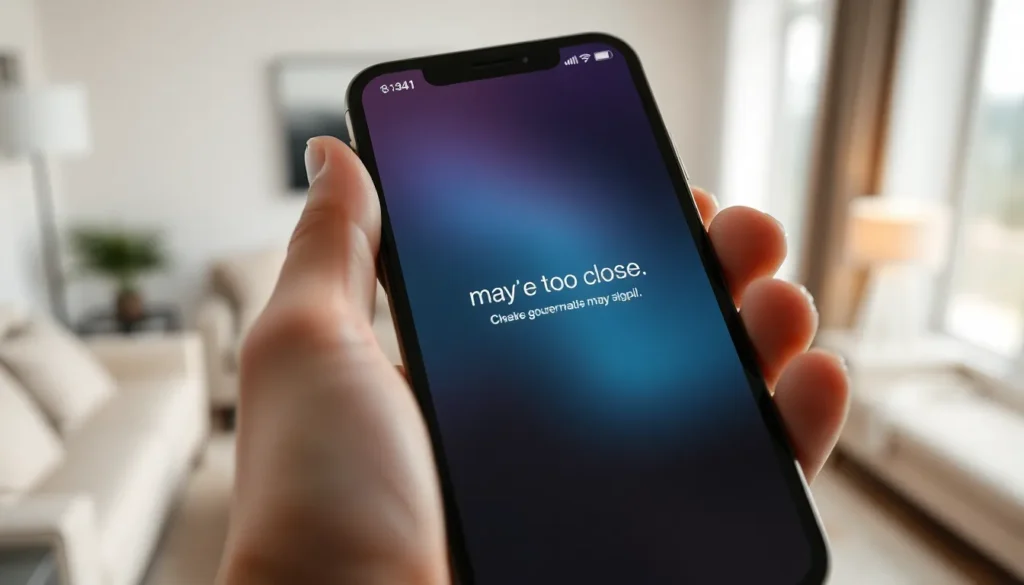
The “may be too close” message appears when an iPhone detects that an object or person is within a short distance. This message serves as a notification that prompts a user to be mindful of their device’s proximity to certain items. Many users find this reminder distracting, especially when it interferes with daily activities.
Bluetooth connections often trigger this alert, particularly when paired devices come too close to the iPhone. When peripherals such as earbuds or wearables are near, the phone often issues a warning. Battery packs and chargers also cause the message if they are too close during charging.
Occasionally, other nearby iPhones or smart devices will activate this notification. Interference from surrounding technology isn’t uncommon, especially in crowded spaces. Proximity settings may adjust their sensitivity levels based on the environment.
Users may wonder why this notification is significant. Device proximity affects battery usage and connectivity. Understanding these parameters helps in managing device performance and user experience. Reducing distractions improves focus and minimizes disruptions.
Various solutions exist to address this notification. Adjusting settings on the iPhone can help in changing how proximity alerts function. Moving paired devices further away decreases the likelihood of receiving the message. In addition, managing Bluetooth connections may enhance the overall experience with the iPhone.
Awareness of this notification empowers users to tailor their device usage. Taking necessary steps allows for a smoother, more enjoyable interaction with technology.
Common Causes of the Message
Receiving the “may be too close” message can occur due to several factors. Understanding these causes helps manage device interactions effectively.
Proximity Sensor Issues
Proximity sensors play a significant role in detecting nearby objects. Faulty or dirty sensors may cause inaccurate readings, leading to erroneous notifications. Users should clean the sensor area to ensure proper function. Cases and screen protectors might obstruct sensor capabilities, contributing to false alerts. Checking for obstructions can enhance accuracy. When sensors fail, the iPhone sends alerts even when objects are not nearby. Regular maintenance of sensors prevents these inconveniences.
Software Glitches
Software issues can trigger unexpected notifications, including “may be too close.” Corrupted files or outdated software may interfere with the device’s ability to process proximity information accurately. Updating to the latest iOS version often resolves these glitches. Retaining optimal performance requires staying current with updates. Restarting the device can also clear temporary software issues, reducing repetitive alerts. Addressing software concerns ensures smoother device interactions.
Effective Solutions to Get Rid of the Message
Managing the “may be too close” message involves several effective solutions that can enhance the overall user experience.
Adjusting Display Settings
Adjusting display settings can significantly reduce proximity alerts. Users can enable or disable features such as the proximity sensor for specific apps. This adjustment often limits notifications that appear based on device proximity. Turning off these notifications can create a less intrusive environment for users. Checking the settings under Notifications can provide options for customization.
Cleaning Your Device
Maintaining a clean device is essential for optimal performance. Dust or debris may obstruct the proximity sensor, causing inaccurate readings. Regularly wiping the screen and edges of the device can help prevent this issue. Using a microfiber cloth ensures that the surface remains free from particles. Keeping charging ports clean also contributes to better functionality.
Updating iOS
Updating iOS can address software-related issues affecting proximity notifications. Users should check for available updates under Settings and then General. Installing the latest software version can resolve any glitches causing the “may be too close” message. Regular updates not only improve device performance but also enhance security features. It’s recommended to enable automatic updates for convenience.
Preventive Measures
Maintaining optimal device interaction reduces annoying proximity notifications. Users can take several steps to manage this issue effectively.
Proper Device Handling
Handling the iPhone correctly limits unnecessary proximity alerts. Keeping the device in a designated area during use prevents accidental detections. Positioning the phone away from other paired devices, especially Bluetooth accessories, minimizes distractions. Using a separate case for earbuds may also help in keeping them at a distance. Awareness of ongoing app usage reduces interference with proximity sensors. Switching off Bluetooth when not needed conserves battery and avoids triggering notifications.
Regular Maintenance Tips
Regular maintenance of the iPhone ensures smooth functionality. Periodically cleaning the device protects the proximity sensor from dust and debris. Using a microfiber cloth to wipe the screen and edges keeps the phone in optimal condition. Keeping the software updated resolves potential issues related to notifications. Checking for iOS updates regularly guarantees improved performance. Restarting the device occasionally refreshes the system and can help reset connectivity issues. Monitoring battery health and replacing the battery when needed maintains performance as well.
Managing the “may be too close” notification on an iPhone can significantly enhance the user experience. By understanding the causes and implementing the suggested solutions, individuals can regain control over their device interactions. Adjusting settings and maintaining the iPhone’s hardware and software not only minimizes interruptions but also promotes better connectivity and battery performance.
Taking proactive steps ensures that technology serves its purpose without becoming a distraction. With a few adjustments, users can enjoy a seamless relationship with their devices, making their daily routines smoother and more efficient.