In the Windy City, where the skyline kisses the clouds and the pizza is deep enough to drown in, drones are taking to the skies like never before. These flying gadgets aren’t just for tech enthusiasts or filmmakers anymore; they’re transforming everything from real estate tours to pizza deliveries. Yes, you read that right—pizza delivered by drone. Who needs a pizza guy when you can have a flying saucer of cheesy goodness?
Overview of Drones in Chicago
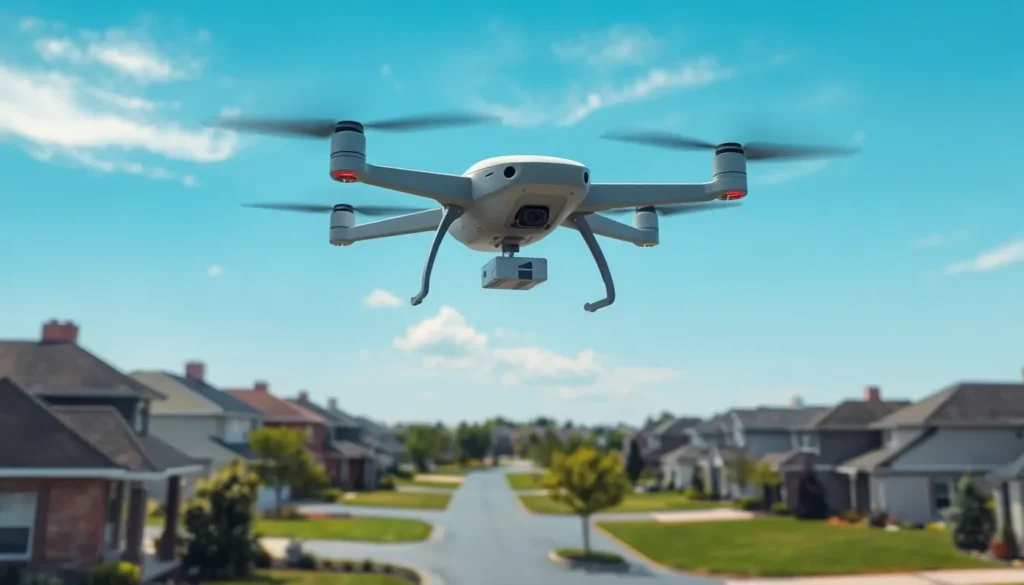
Drones increasingly play a crucial role across various sectors in Chicago, showcasing their versatility and efficiency. Industries such as real estate leverage drones for aerial photography, enhancing property listings with stunning visuals. Real estate agents utilize drone footage to capture expansive views, making listings more appealing to potential buyers.
Delivery services adopt drones for efficient distribution methods, contributing to quicker deliveries. Companies like Domino’s explore drone technology for pizza deliveries, demonstrating innovative logistics solutions. Such advancements illustrate how drones streamline operations, reduce delivery times, and enhance customer satisfaction.
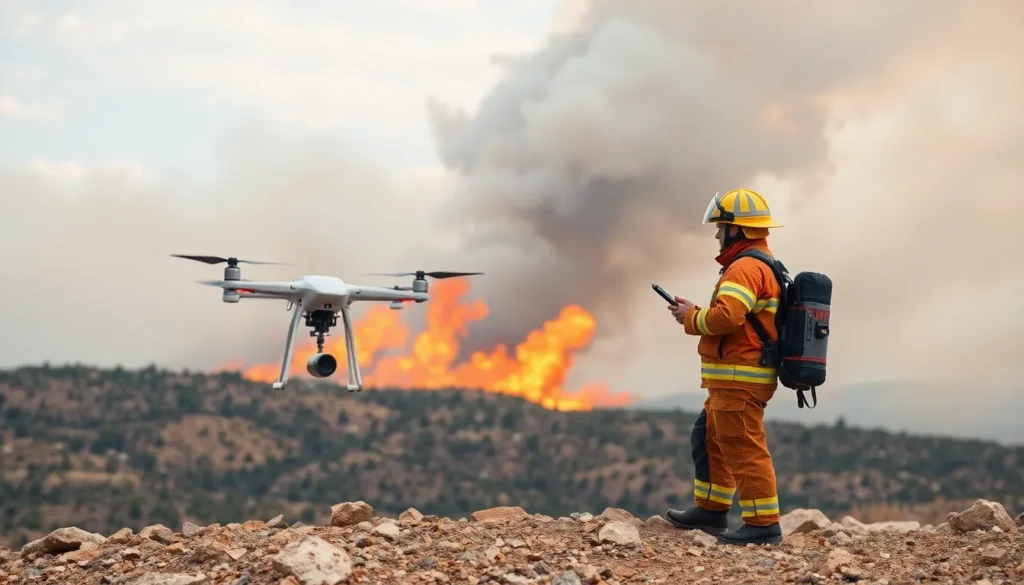
Public safety agencies employ drones for monitoring and surveillance, aiding in emergency response scenarios. Law enforcement utilizes drones to survey large events, track criminal activity, and assess emergency situations effectively. The integration of drones in public safety not only increases operational efficiency but also improves community security.
Agriculture in the Chicago area benefits from drones for crop monitoring and management. Farmers utilize drones to assess crop health, optimize irrigation, and manage resources effectively. Drones equipped with sensors and cameras provide real-time data, enabling farmers to make informed decisions.
Furthermore, construction companies integrate drones for site surveying and progress tracking. Drones collect detailed aerial data, enhancing project management by providing up-to-date visual information. This integration supports better planning and resource allocation, ensuring projects stay on track.
Overall, the adaptability of drones in Chicago reflects an ongoing technological shift. They not only optimize traditional services but also pave the way for innovative practices across various industries.
Regulations Surrounding Drones
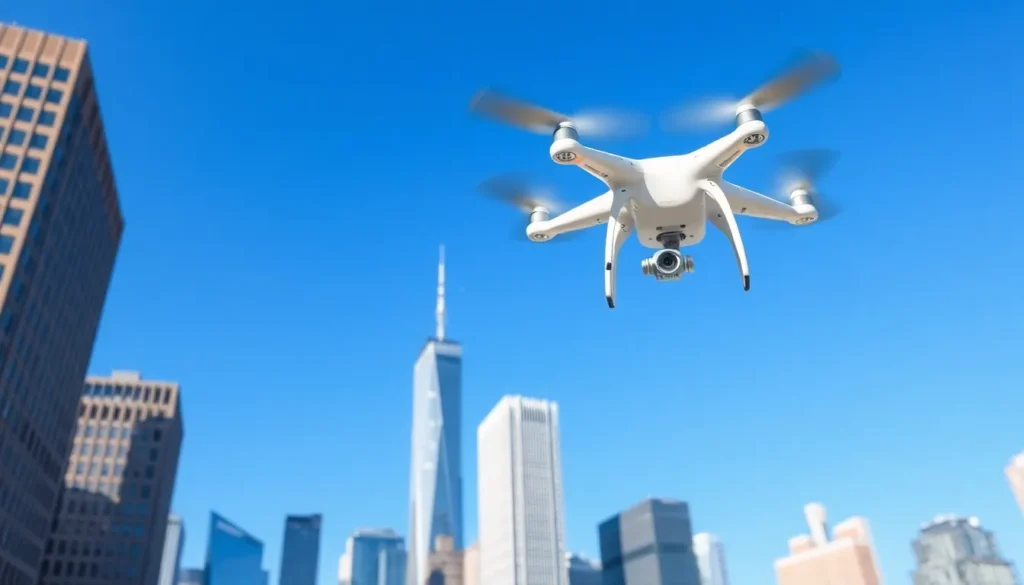
Drones in Chicago operate under strict regulations, ensuring safety and compliance within the urban landscape. Adherence to these regulations safeguards citizens and promotes responsible drone usage.
Federal Guidelines
The Federal Aviation Administration (FAA) establishes primary rules for drone operation nationwide. These guidelines require all drone pilots to register their drones if they weigh over 0.55 pounds. Pilots must also adhere to specific altitude limits of 400 feet and maintain visual line of sight during flights. In addition, commercial drone operators must hold a Remote Pilot Certificate, demonstrating knowledge of airspace regulations and safe operational practices. Penalties for non-compliance can include fines and legal repercussions, reinforcing the importance of following federal instructions.
Local Laws and Ordinances
Chicago imposes additional regulations on drone use within the city limits. Drone operators must obtain permission before flying in controlled airspace, such as near airports and other sensitive areas. Local laws prohibit flying over private property without consent, ensuring privacy protection for residents. Furthermore, specific no-fly zones, such as parks and near large public events, require special consideration. Violations of these local ordinances can result in fines and confiscation of equipment, highlighting the necessity for drone users to be aware of their surroundings and local laws.
Popular Use Cases for Drones
Drones in Chicago demonstrate versatility across various sectors. Their applications enhance efficiency and accuracy, revolutionizing traditional practices.
Real Estate Photography
Drones capture high-quality aerial images and videos, elevating real estate listings. They provide potential buyers with unique perspectives of properties and surrounding areas. Agents use drone footage to showcase the scale of homes, landscapes, and neighborhoods, which enhances marketability. Properties listed with aerial visuals tend to attract more interest, resulting in faster sales. This method creates engaging online content and improves social media presence for real estate professionals.
Infrastructure Inspections
Drones streamline infrastructure inspections by accessing hard-to-reach or hazardous areas. They inspect bridges, roadways, and rooftops, ensuring safety and reducing manual labor risks. Drones equipped with high-resolution cameras capture detailed images, revealing structural issues that may go unnoticed. This technology saves time and resources, allowing inspectors to analyze data promptly. Transportation agencies utilize drone insights for maintenance planning, facilitating timely repairs and improving public safety.
Events and Entertainment
Drones transform events and entertainment experiences by offering unique aerial views. Event organizers use drones for live streaming, enhancing audience engagement from multiple angles. In Chicago, drone light shows deliver captivating visuals during festivals and celebrations. This innovative approach replaces traditional fireworks, reducing noise pollution and environmental impact. Drones also assist in security surveillance, providing real-time monitoring to ensure safety during large gatherings.
Challenges and Concerns
Drones in Chicago face several challenges and concerns that affect their growing utilization across various sectors. Two significant areas of focus include privacy issues and airspace regulations.
Privacy Issues
Privacy issues arise with the increasing presence of drones in urban environments. Residents often express concerns over unsolicited aerial imagery and surveillance. Incidents of capturing footage without consent can lead to conflicts and legal disputes. Local regulations aim to address these concerns by prohibiting flights over private property without permission. This legal framework attempts to balance technological innovation with individual privacy rights, ensuring responsible usage.
Airspace Regulations
Airspace regulations play a critical role in drone operations within Chicago. The Federal Aviation Administration (FAA) mandates specific guidelines, including flight restrictions in certain zones and altitude limits. Operators must maintain a visual line of sight and receive a Remote Pilot Certificate for commercial activities. Local laws further complicate drone usage, designating no-fly zones, particularly near airports and crowded locations. Noncompliance can result in severe penalties, including fines and drone confiscation. These regulations strive to ensure safety while promoting organized drone integration into urban airspace.
Future of Drones in Chicago
Drones in Chicago are set to experience significant growth and innovation across multiple industries. The integration of advanced technologies, like artificial intelligence and machine learning, enables enhanced data collection and processing capabilities. Such developments improve drone functionalities, making them invaluable tools for businesses and government agencies.
Drones will increasingly contribute to public safety measures. They provide real-time aerial surveillance for police departments and firefighting units, enhancing situational awareness during emergencies. The use of drones for crowd management at large events will improve safety measures, allowing authorities to monitor situations more effectively.
E-commerce and delivery services can expect transformative changes. With operators like Amazon and local companies exploring drone delivery options, Chicago’s consumers may soon enjoy faster and more efficient delivery experiences. Drones could streamline logistics, cutting down delivery times significantly and reducing traffic congestion associated with conventional delivery vehicles.
Agriculture will also benefit from drone technology advancements. Urban farming initiatives can leverage drones for monitoring crop health, optimizing irrigation, and managing pest control. This optimization may lead to increased crop yields and more sustainable farming practices.
Educational institutions in Chicago are beginning to embrace drone technology for classroom learning. Courses related to drone piloting and aerial photography are becoming increasingly popular, preparing students for careers in this expanding field.
Regulations surrounding drone use are adapting to keep pace with technological advancements. As safety concerns evolve, regulatory bodies, including the FAA, may implement new guidelines to ensure responsible drone operation. Collaboration between local government and stakeholders will be essential to developing effective frameworks that support innovation while safeguarding public interests.
Investments in drone technology are likely to attract new companies to the Chicago area, fostering economic growth and job creation in the process. As the landscape for drones continues to evolve, Chicago stands to emerge as a leading hub for drone innovation and application.
Drones are transforming the landscape of Chicago in remarkable ways. Their diverse applications are enhancing industries from real estate to public safety while improving efficiency and innovation. As drone technology continues to evolve the potential for new uses is vast.
However the importance of adhering to regulations cannot be overstated. Balancing technological advancements with safety and privacy concerns is crucial for sustainable growth. With collaboration between stakeholders and local government the future looks promising for drones in the Windy City. As they become more integrated into everyday life Chicago stands on the brink of a new era of aerial innovation.